How to Build Multiple Passive Income Streams as a Beginner
Jun 15, 2026
Everyone who talks about financial independence eventually says the same thing: you need multiple streams of income.
That part is true. What rarely gets explained is the order those streams should come in, how to know when you're actually ready to add the next one, and why trying to build several at once is one of the most reliable ways to build none of them properly.
This post is the final part of the Passive Income for Beginners series. If you've read the earlier posts, you already understand what passive income is, which ideas work for beginners, and how digital products and Etsy fit into the picture. This post is about how to layer it all together over time into something that actually compounds.
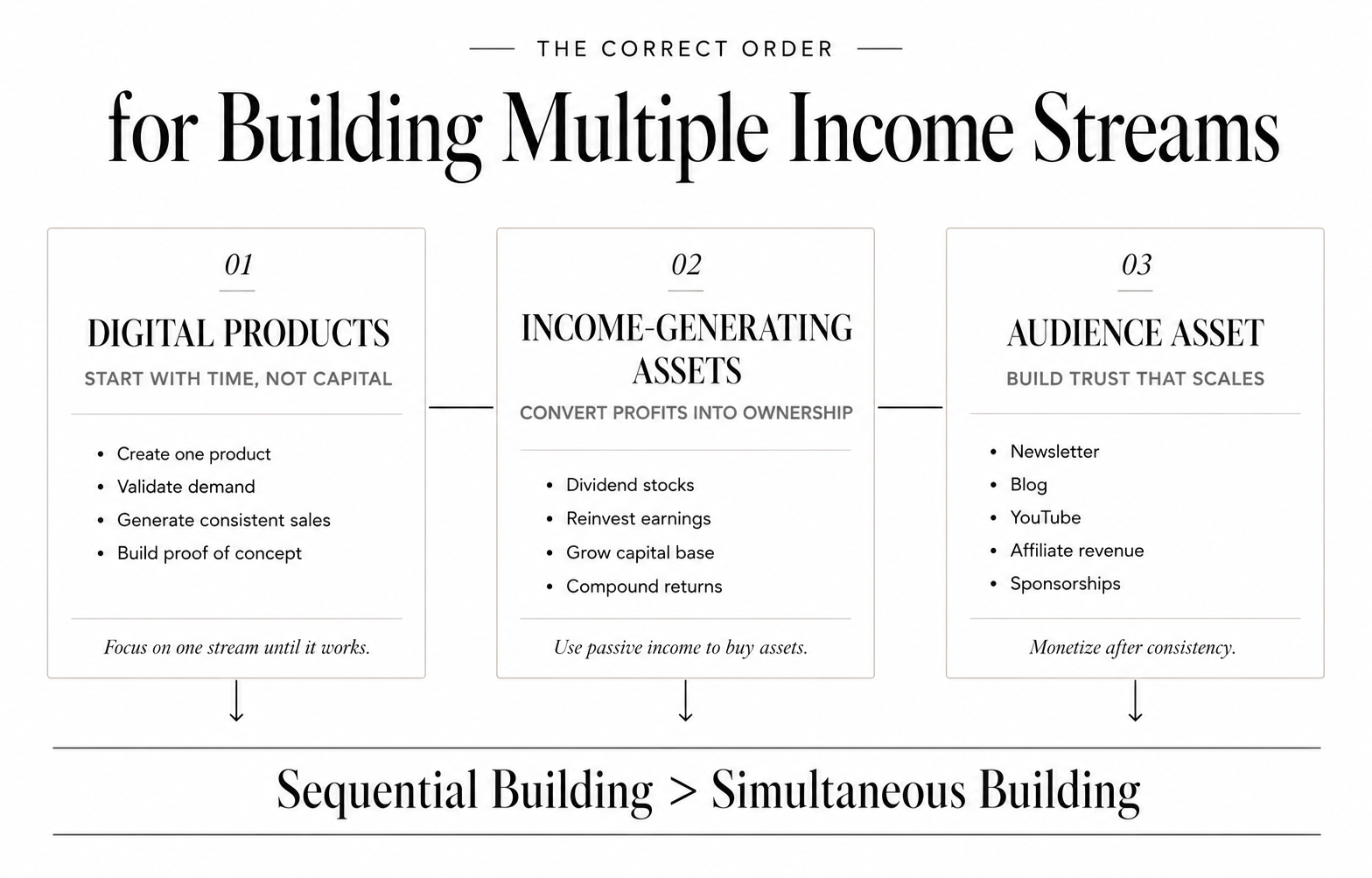
The sequence matters more than the number of streams. One income stream built properly will always outperform three built badly and simultaneously.
Why Most People Get This Wrong From the Start
The fantasy version of multiple income streams looks like this: set up a dozen different things, let them all run in parallel, and watch the money stack up from every direction.
The reality for most beginners is different. They read a list of passive income ideas, pick several that sound interesting, start building all of them at the same time, make very little progress on any of them, and eventually conclude that passive income doesn't work.
It isn't that passive income doesn't work. It's that attention is finite, and spreading it across six unstarted income streams produces six incomplete projects instead of one functioning one.
The people who successfully build multiple income streams almost never built them simultaneously. They built them sequentially — one at a time, in a deliberate order, each one funding or enabling the next. The "multiple" part is the result of years of sequential building, not the starting strategy.
That reframe changes everything about how you approach this.
The Problem with Doing Everything at Once
There's a practical reason sequential beats simultaneous that goes beyond just focus.
Each income stream has its own learning curve. Digital products require you to understand what sells, how to create it, how to list it, and how to price it. Dividend investing requires you to understand which assets to buy, when to add to positions, and how to think about yield versus growth. Building an audience requires consistency, platform knowledge, and the patience to let compounding work over months and years.
These are distinct skill sets. Trying to develop all of them at the same time means developing none of them deeply. You end up knowing a little about a lot of things and not enough about any one thing to make it generate meaningful income.
Sequential building lets you go deep on one stream, get it generating consistently, extract the lessons from that process, and bring that knowledge forward into the next stream. Each one makes you a better builder of the one that follows.
The goal is not to have many things started. It's to have each thing working before you move on.
The Right Order to Build Passive Income Streams
There is no universally perfect sequence, but there is one that makes practical sense for most beginners — particularly those starting without significant capital or an existing audience.
Here's the order I'd follow, and largely did follow, with the benefit of knowing what I know now:
Start with digital products. Use that income to invest in capital assets. Build an audience in parallel and monetize it over time.
Each stage feeds the next. Each one is more accessible than it might appear when you're standing at the beginning looking at the whole path. Let's go through each one in detail.
Stream One: Create a Digital Product
Digital products are the right starting point for most beginners for reasons covered in depth in Part 2 of this series — but the short version is this: they require time rather than capital, they can be sold without an existing audience through platforms like Etsy, and the margin is essentially 100% once the product exists.
The goal at this stage is not to build a product empire. It's to build one product that sells consistently, go through the full cycle of creating, listing, getting feedback, and improving, and generate your first reliable stream of passive income.
What counts as "working" before you move on? Not a specific dollar amount — but a consistent signal. A product that sells regularly without you actively promoting it every day. A listing that gets found through organic search on Etsy. A product that generates reviews and repeat customers. When your first product is doing that reliably, you have proof of concept and you have income to reinvest.
The specific product type matters less than the consistency signal. A $17 checklist that sells three times a week is a working passive income stream. A $197 course that sells sporadically after a launch push is not — at least not yet.
Build more products once the first is working. Let the Digital Product Flywheel run: create, launch, get buyers, learn what they actually want, improve, repeat. Each cycle produces a better product faster. Eventually you have a small product line that generates meaningful monthly income — and that income becomes the fuel for everything that comes next.
Stream Two: Reinvest Into Income-Generating Assets
Once your digital product income is consistent, the single most important decision you can make is what to do with it.
The answer is not to spend it.
This is where most people stall out. The passive income starts coming in, it feels like extra money, and it gets absorbed into lifestyle spending — a nicer dinner, a new piece of equipment, a vacation that gets charged to the business. The income stream exists, but it doesn't compound. The snowball never starts rolling.
The right move is to take that digital product income and deploy it into Bucket One assets — the capital-based income generators that were covered in the Passive Income for Beginners guide.
For most people starting out, dividend-paying stocks are the most accessible entry point. You don't need a large sum to begin — you can start with whatever your first month of product income produces and add to it consistently. The returns in the early stages will feel small. That's normal and it's not a reason to stop. The compounding effect on dividend reinvestment takes years to become dramatic, but it does become dramatic.
Real estate comes later in the sequence — not because it's out of reach, but because it requires more capital and more infrastructure than most beginners have at the digital product stage. It's a natural Tier Two asset once your investment base has grown and your passive income is generating enough to fund a down payment or a cash purchase over time.
The principle that connects both of these: your digital product income should be building your capital base, not your lifestyle. Use your active income — your job, your consulting, your services — to fund your living expenses. Use your passive income to buy assets.
One working digital product funding a small but growing dividend portfolio is two income streams. That's the beginning of the multiple streams picture, and it happened through sequential building, not simultaneous juggling.
Stream Three: Build and Monetize an Audience
The third stream is the one that takes the longest to build and scales the most dramatically once it's established.
Building an audience — through a blog, a newsletter, a YouTube channel, a podcast, or a consistent social platform presence — creates an asset that can be monetized in multiple ways simultaneously: affiliate commissions, sponsorships, ad revenue, joint ventures, and direct product sales to people who already trust you.
The reason this comes third in the sequence rather than first is straightforward. Audience building requires consistency over an extended period before it generates meaningful income. If you're also trying to build your first digital product and learn how to invest at the same time, the audience-building piece tends to get deprioritized whenever life gets busy — which means it never gets the sustained attention it needs to compound.
Starting it third doesn't mean starting it late. It means starting it when you have an existing income base that reduces the financial pressure on it to perform immediately. When your digital product sales and your investment returns are already covering some ground, you can build your audience from a position of patience rather than desperation. That patience is what lets the compounding happen.
Audience monetization works best when it's built around content you're genuinely creating anyway — sharing what you know, documenting what you're building, teaching what you've learned. The affiliate income I earn from programs like the Kajabi Partner Program came directly from content I was creating about tools I was already using. The work was happening regardless. The monetization was added to work that already existed.
This is also where the three streams start reinforcing each other. Your audience discovers your digital products. Your digital product buyers join your audience. Your investment journey becomes content that attracts people interested in passive income. The boundaries between streams start to blur in the best possible way.
How to Know When You're Ready to Add the Next Stream
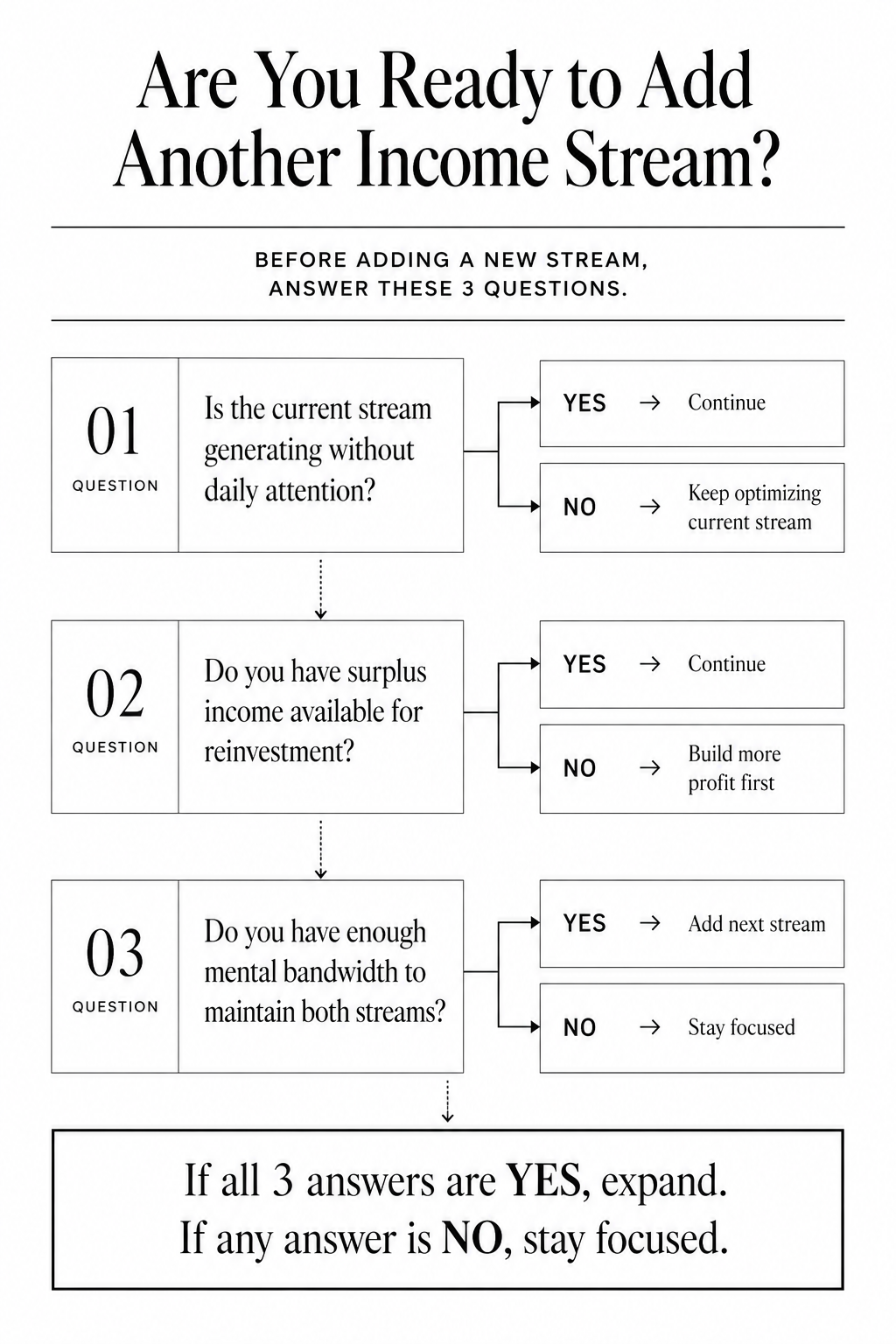
The signal-based approach to adding streams comes down to three questions you can ask yourself honestly before making the move.
Is the current stream generating without my daily attention? Passive income that requires you to actively hustle for every sale is not yet passive. If you still need to be involved every day to keep the income coming in, you haven't finished building that stream yet. The next stream can wait.
Do I have income to reinvest, or am I spending everything I make? Moving to Stream Two specifically requires surplus income. If your digital product sales are being absorbed into monthly expenses, the investment compounding can't start. The readiness signal here isn't a dollar amount — it's the existence of money you're not spending.
Do I have enough mental bandwidth to add something new without abandoning what's working? This one is underrated. Adding a new income stream when you're already stretched thin on the current one usually means neither gets the attention it needs. The new stream stalls. The existing stream suffers. You end up worse off than before you added it.
If the answer to all three questions is yes, you're ready. If any one of them is no, the most productive thing you can do is keep building the current stream until the answer changes.
This isn't a framework for going slow. It's a framework for going in the right order — which is the fastest path to genuinely having multiple streams that all work.
How the Passive Income Snowball Connects Everything
This is the concept I keep returning to throughout this series, and it belongs here at the end because this is where it becomes most visible.
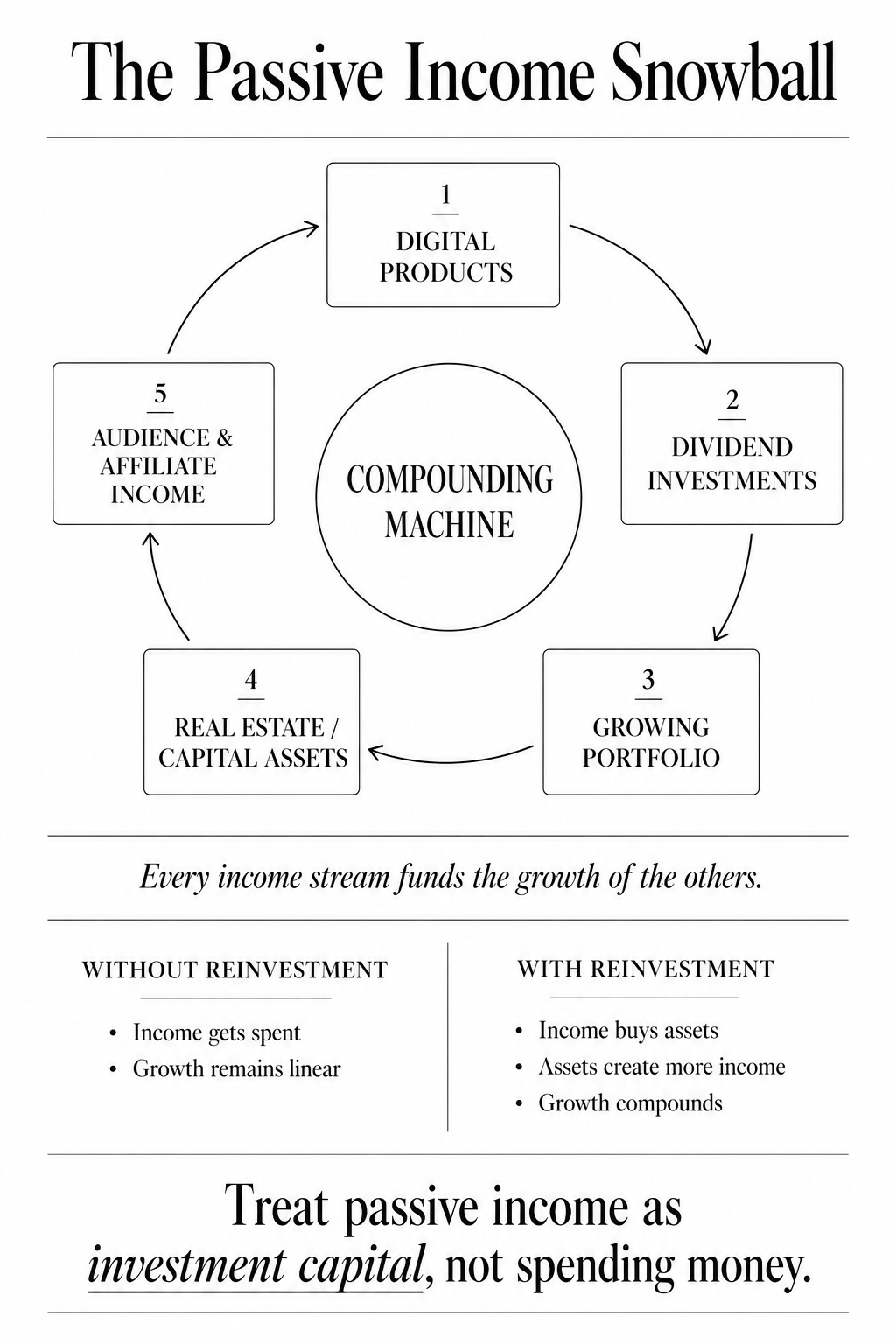
The Passive Income Snowball — taking every stream of passive income you generate and reinvesting it into more income-generating assets rather than spending it — is what transforms sequential stream-building into something that compounds exponentially rather than additively.
Without the snowball, three income streams produce three times the income of one. With it, three income streams produce income that keeps multiplying because each one is continuously funding the growth of the others.
Digital product income funds dividend stock purchases. Dividend income gets reinvested to buy more shares. A growing portfolio eventually funds a real estate down payment. Rental income gets reinvested into more products or more shares. Affiliate income from a growing audience gets added to the same pool.
At a certain point the streams stop feeling separate. They become one compounding machine with multiple inputs — and the machine gets faster the longer it runs.
The discipline required to keep the snowball rolling is the same throughout: treat passive income as investment capital, not spending money. Live off your active income. Let everything else compound.
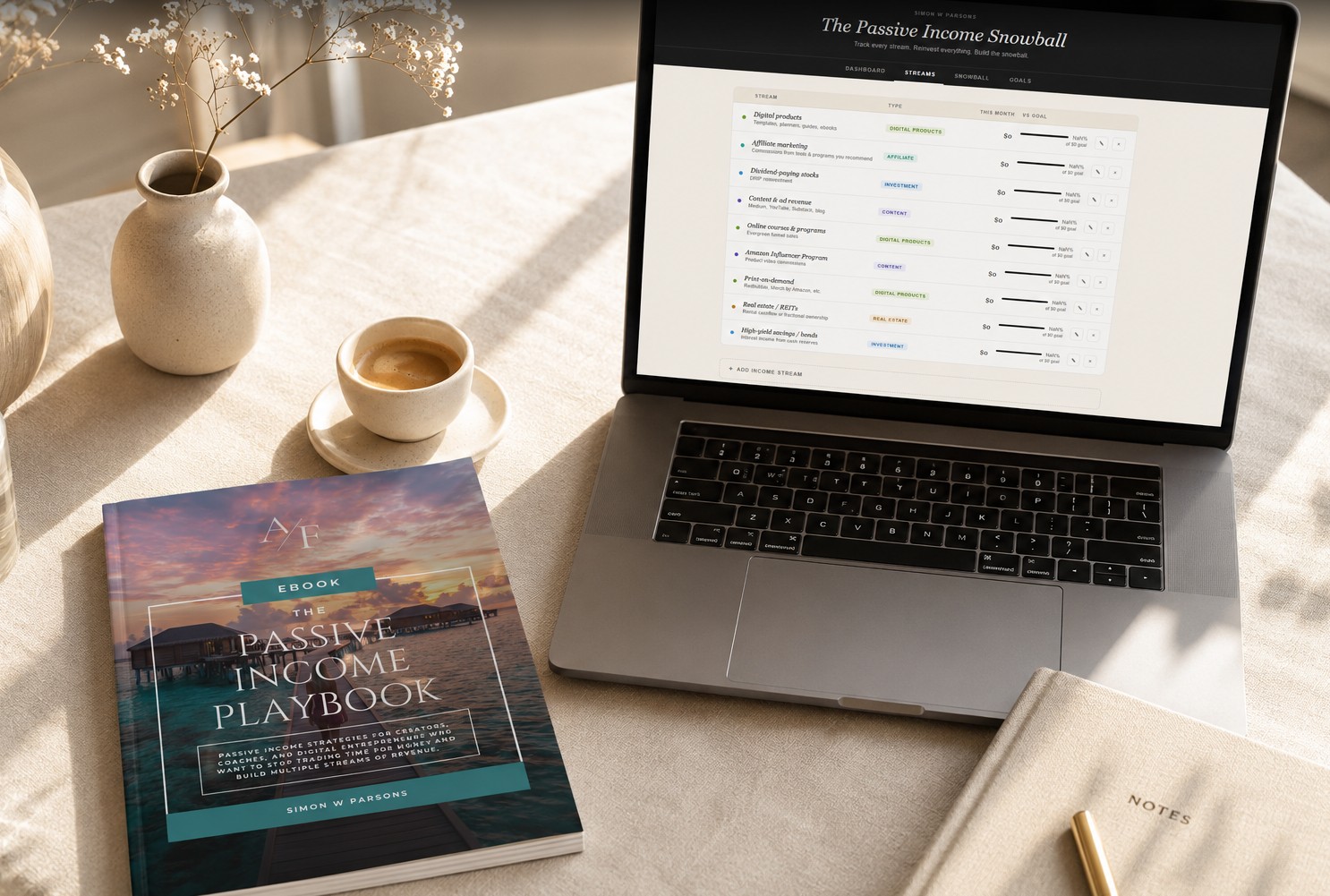
I document this in real time in the Passive Income Playbook, including the Snowball Tracker tool that lets you map your own streams and visualize the compounding effect over time. If you want to see what your specific numbers could look like as you build, that's the place to run them.
The Long Game
Building multiple passive income streams is not a 90-day project. It's not a year-long project for most people either.
What it is: a compounding process that starts slowly, feels frustratingly incremental in the early stages, and then at some point starts moving faster than you expected. The people who get there are almost never the ones who found a shortcut. They're the ones who stayed consistent long enough for the compounding to kick in.
The starting point is always simpler than it looks from the outside. One digital product. One listing. One sale. One reinvestment. The complexity comes later, and by then you've already built the skills and the systems to handle it.
The most valuable thing you can do today is not plan the full income ecosystem you want to have in five years. It's take the first step on the sequence and trust that the rest follows from there — because it does, for everyone who stays in long enough to find out.
The Complete Passive Income for Beginners Series
This is Part 4 and the final post in the cluster. Here's the full series in order:
Passive Income for Beginners: The Complete Guide — the hub post. What passive income actually is, the three buckets, and the Passive Income Snowball framework.
Best Passive Income Ideas for Beginners with No Experience — Part 1. The tiered list of where to start, from zero capital and zero audience.
How to Start a Digital Product Business as a Beginner — Part 2. The full roadmap for creating, validating, pricing, and selling your first digital product.
How to Sell on Etsy for Beginners — Part 3. How to use Etsy as your first selling channel without an existing audience.
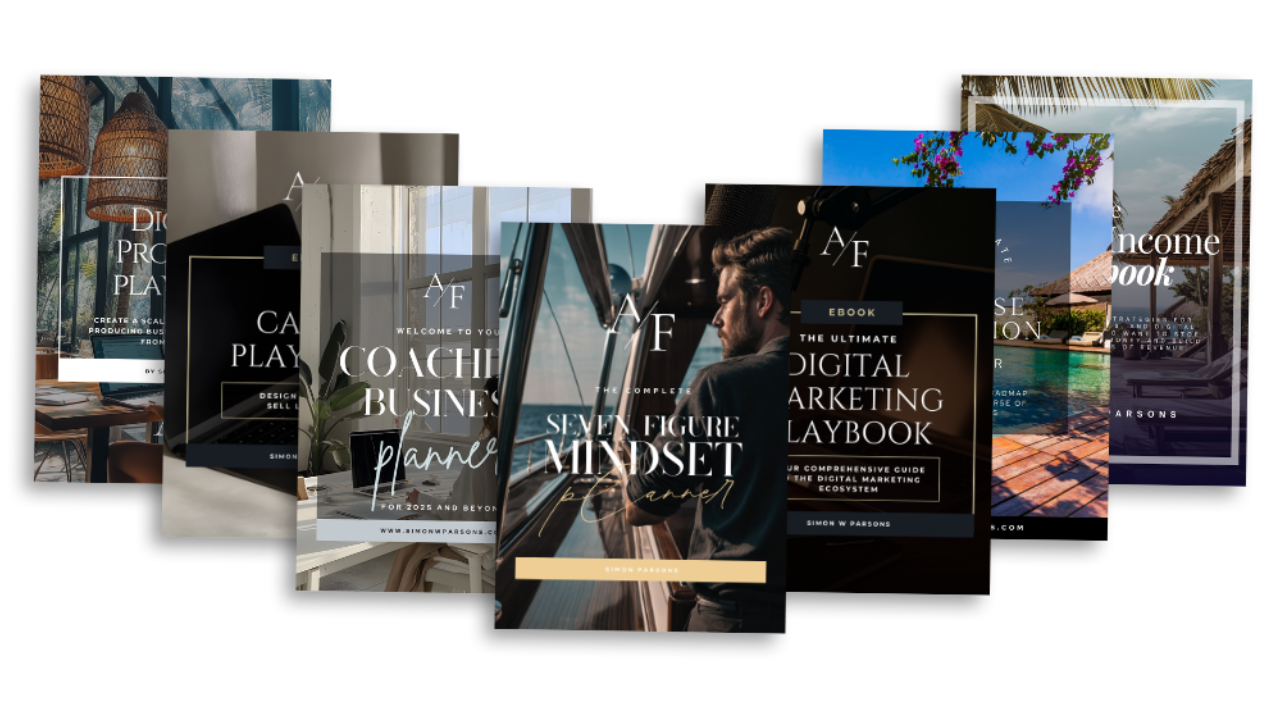
For the complete strategy with tools, trackers, and deep-dive frameworks, the Passive Income Playbook and Etsy Digital Product Playbook cover the full system. The Digital Product Playbook is included as a bonus with the Etsy Playbook.
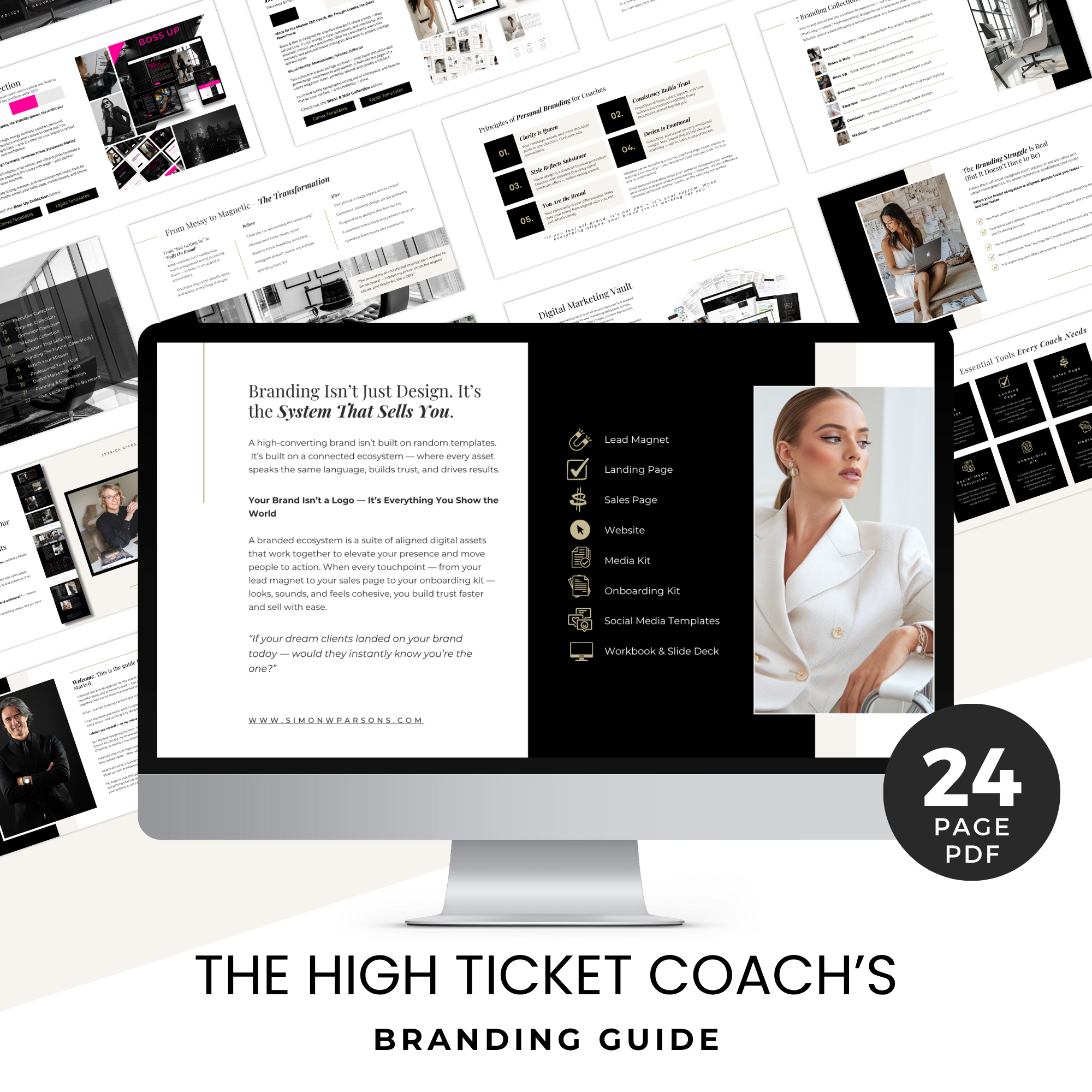
Grab my free High Ticket Coach Branding Guide
A free guide for coaches, consultants, and creators who are ready to ditch the DIY look and step into a cohesive, premium brand presence that sells.
We hate SPAM. We will never sell your information, for any reason.