How Kajabi Website Templates Differ From Sales Page Templates
Feb 18, 2026
I want to clarify something that quietly causes a lot of confusion.
When most coaches say they need a “Kajabi template,” they don’t always know which type they actually mean.
And that’s not a beginner mistake. It’s just that Kajabi uses the same builder for everything. So the lines blur.
But structurally, a Kajabi website template and a Kajabi sales page template serve very different roles. If you choose the wrong one for the job, the experience feels off — even if the design looks beautiful.
Let me walk you through it the way I think about it.
Your Website Template Is Your Environment
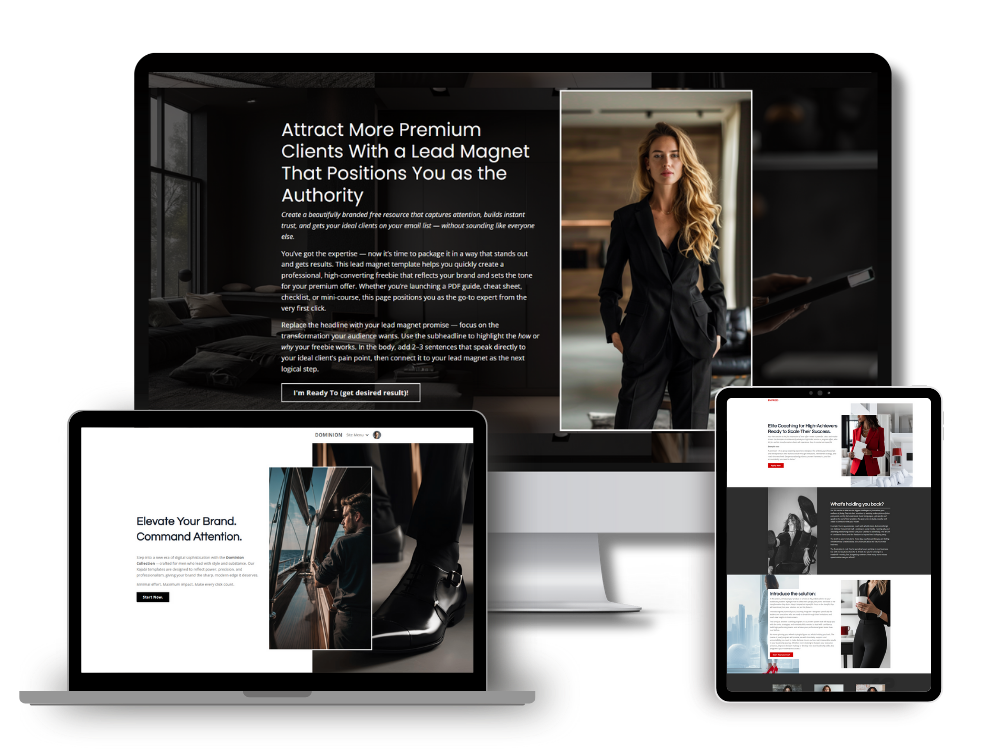
A Kajabi website template shapes your overall presence.
It includes pages like:
-
Home
-
About
-
Services or Offers
-
Podcast or Blog
-
Contact
Its job is to create stability.
A strong website template communicates:
-
Who you are
-
Who you work with
-
What you offer
-
What your brand feels like
It gives someone space to explore. To click around. To understand you at their own pace.
The pacing is slower. The tone is broader. The layout supports credibility.
When I build website templates, I focus on hierarchy and breathing room. Navigation matters. Section spacing matters. How headlines stack across multiple pages matters. It has to hold up over time.
A website template is your foundation. It’s not trying to close someone immediately. It’s trying to position you clearly.
That difference changes everything.
A Sales Page Template Is a Decision Engine
A Kajabi sales page template has one job.
Guide someone toward a specific action.
It’s built around momentum.
Instead of multiple navigation paths, it narrows attention. Instead of broad brand storytelling, it structures persuasion. Instead of exploration, it creates sequence.
The order of sections matters more than the design details.
A sales page template typically includes:
-
A focused headline
-
Problem and outcome framing
-
Offer explanation
-
Social proof
-
Objection handling
-
Clear calls to action
Every block moves forward.
When done well, it feels natural. It doesn’t push. It simply reduces friction between interest and decision.
That’s very different from how a homepage functions.

Why People Mix These Up
I see this often:
A coach installs a beautiful website template…
Then tries to use it as a sales page.
Or they grab a sales page template and try to stretch it into an entire website.
That’s when things start feeling heavy or scattered.
A website template doesn’t create urgency.
A sales page template doesn’t support exploration.
They’re built for different moments in the buyer’s journey.
How I Decide Which One Someone Needs
If you’re refining your brand and positioning yourself long-term, start with a website template.
If you’re launching a specific offer, program, or cohort, you need a sales page template.
Many established coaches need both.
One creates the environment and one converts inside that environment.
The mistake isn’t choosing wrong. It’s assuming one can replace the other.
If your site feels polished but your offer pages feel flat, the issue may not be your copy. It may be the structure supporting it.
And if your sales page feels focused but the rest of your site feels disconnected, that’s usually a signal too.
Templates solve different problems. A website template creates a stable environment. A sales page template creates direction within that environment. When each one is used for its intended role, the whole system feels more coherent.
That’s how I think about it when designing Kajabi templates. The goal is clarity. Each page should know what job it’s responsible for.
In the next article, I’ll walk through how Kajabi checkout page templates fit into this structure, because that final step is where small friction points tend to show up.
For now, if you’re evaluating templates, ask yourself what this page is meant to do. Position your work, or guide a decision. Once that’s clear, the choice becomes straightforward.
Thanks for reading,
Simon
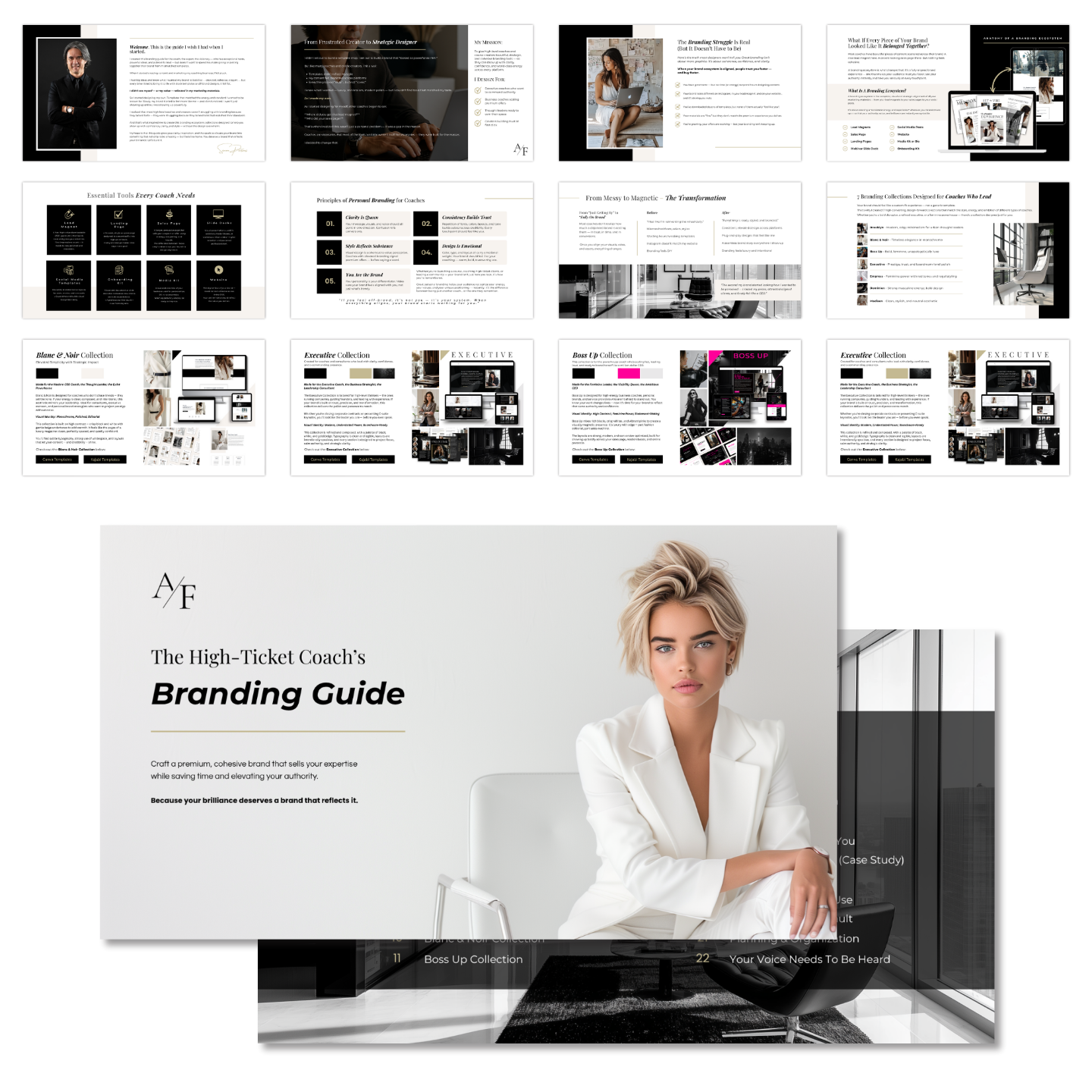
Grab my free High Ticket Coach Branding Guide
A free guide for coaches, consultants, and creators who are ready to ditch the DIY look and step into a cohesive, premium brand presence that sells.
We hate SPAM. We will never sell your information, for any reason.