How to Choose the Right Kajabi Template Based on Where Your Business Is Today
Feb 05, 2026
I want to talk about choosing a Kajabi template in a more practical way, because most advice skips the part that actually matters.
People usually ask which template is best. What they really mean is which one will make them feel more confident about where their business is right now. That’s a different question, and it deserves a different answer.
The right Kajabi template isn’t universal. It’s contextual. It depends on how settled your business actually is, not how you want it to look from the outside.
Early on, most businesses are still in motion.
Offers change. Messaging shifts. Pages get rewritten. At that stage, flexibility matters more than polish. You’re learning what needs to exist on the site and what doesn’t. You’re discovering which pages get used and which ones don’t.
In that phase, the best template is one that stays out of your way.
Simple layouts. Fewer assumptions. Nothing too opinionated. You don’t need a template that signals authority yet. You need one that lets you experiment without friction.
Problems tend to show up when people try to lock in structure too early. They end up fighting the template instead of benefiting from it. If you’re still adjusting your positioning or refining your offer, that tension is a signal to stay flexible a little longer.
As the business matures, something changes.
You stop rewriting everything. Offers stabilize. The questions people ask become more predictable. You’re no longer experimenting — you’re refining.
That’s usually when inconsistency starts to feel expensive.
Pages drift. Spacing varies. Each update introduces small design decisions that don’t really need to be made anymore. Nothing breaks, but the site starts to feel provisional, like it’s always mid-edit.
That’s the moment where structure becomes valuable.
A good Kajabi template at this stage provides consistency. Not rigidity, but a clear system for how pages behave. Headings stay consistent. Sections flow the same way. Adding or updating content feels lighter because fewer decisions are required.
For many coaches, this is where paid templates start to make sense. Not because they’re more impressive, but because they reduce cognitive load over time.
At a later stage, templates serve a different role altogether.
When your business is established, the website becomes less about explanation and more about reinforcement. People often arrive already aware of your work. They’re looking for confirmation, not persuasion.
In that context, restraint matters.
You want a template that feels composed. One that doesn’t over-sell or over-design. One that lets the work speak without competing for attention. The structure should feel resolved, not clever.
This is where overly trendy templates tend to fail. They draw attention to themselves instead of supporting the content. They age quickly. They make small updates feel heavier than they should.
The right template at this stage is one you don’t think about much. It holds its shape. It adapts quietly as the business evolves. It doesn’t need to be revisited every few months.
That’s usually the point people don’t talk about enough.
Choosing the right Kajabi template isn’t about finding the most impressive design. It’s about choosing a level of structure that matches the maturity of your business.
Too little structure creates friction.
Too much structure too early creates resistance.
The goal is alignment.
When the template matches where you are, the site starts to feel easier to maintain. Updates feel intentional instead of disruptive. The website stops being a project and starts being infrastructure.
That’s how you know you’ve chosen correctly.
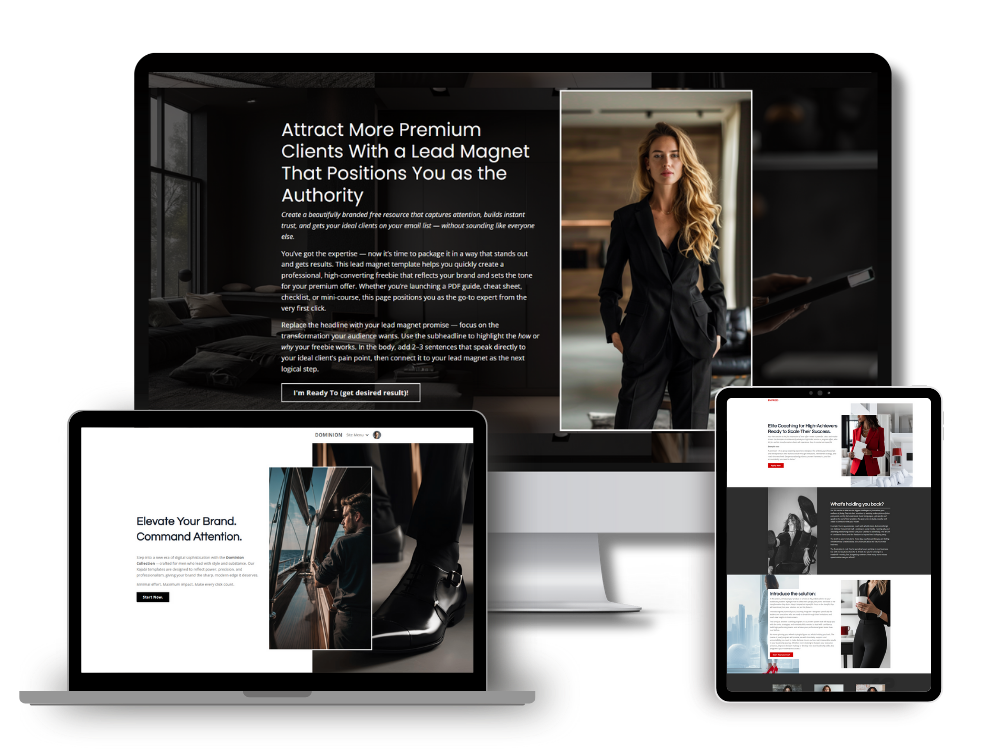
If you want to explore templates designed for businesses that are past experimentation and focused on consistency, you can browse my Kajabi templates here. They’re built to support clarity, stability, and long-term use without relying on trends.
Next, I’ll walk through common mistakes coaches make when choosing Kajabi templates, and how to avoid locking yourself into something that doesn’t fit anymore.
Grab my free High Ticket Coach Branding Guide
A free guide for coaches, consultants, and creators who are ready to ditch the DIY look and step into a cohesive, premium brand presence that sells.
We hate SPAM. We will never sell your information, for any reason.