What Actually Makes a Kajabi Template Convert
Jan 23, 2026
I want to be careful with the word convert, because it’s often used to describe things that don’t really drive decisions.
Most people assume conversion comes from copy tricks, urgency, or clever layout patterns. In reality, most conversions happen because nothing gets in the way. The page feels clear. The offer feels grounded. The reader doesn’t feel rushed or confused.
Templates play a bigger role in that than most people realize.
A Kajabi template doesn’t convert because it’s beautiful. It converts because it creates order. When structure is handled well, the content has room to do its job. When structure is sloppy, even strong offers struggle to land.
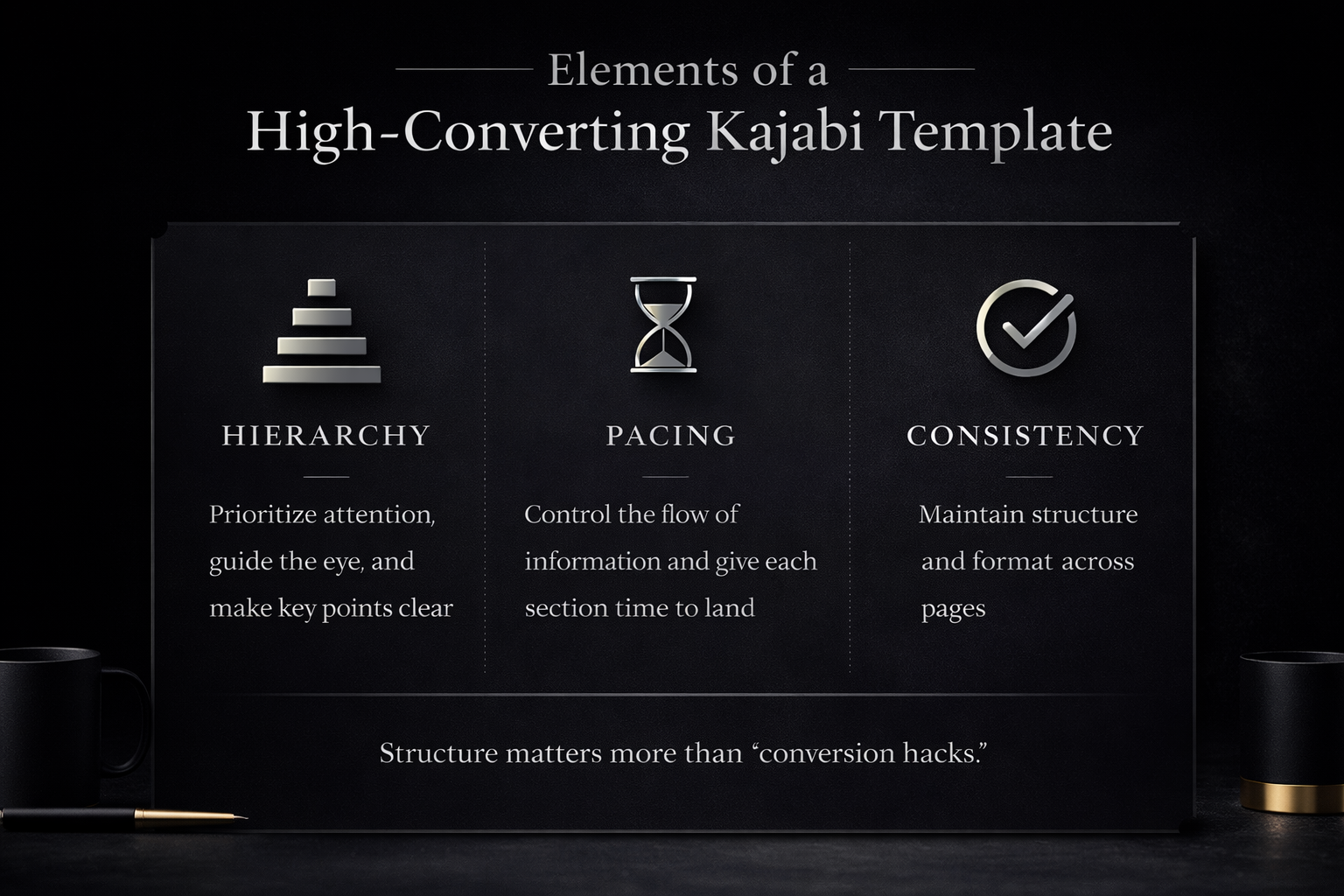
The first thing that matters is hierarchy.
Good templates make it obvious what matters and what doesn’t. Headlines are clearly separated from supporting text. Sections are spaced intentionally. The eye knows where to go next without effort. That sounds basic, but it’s where most pages fail.
When hierarchy is unclear, readers work harder than they should. They skim, miss key points, or lose interest without knowing why. Conversion drops quietly, not because the offer is weak, but because the page feels noisy.
The second thing that matters is pacing.
A strong template controls how information unfolds. It doesn’t dump everything at once. It gives the reader space to absorb one idea before introducing the next. This is especially important on sales and checkout pages, where hesitation tends to show up.
Pacing isn’t about length. It’s about rhythm. A well-paced page feels calm, even when it’s persuasive. A poorly paced page feels urgent, even when it’s not trying to be.
Spacing does a lot of this work behind the scenes. When sections are too tight, everything feels compressed. When there’s room to breathe, the message feels more confident by default.
Consistency is the third piece, and it’s often overlooked.
Templates that convert well don’t reinvent themselves from page to page. Headings behave the same way. Buttons appear in predictable places. Typography stays restrained. That consistency builds trust quietly, especially for coaches and course creators whose businesses rely on credibility over impulse.
When every page feels slightly different, the site feels provisional. When the structure holds steady, the business feels established.
Another factor that matters more than people expect is restraint.
Templates that try to do too much tend to underperform over time. Too many visual effects, too many layout variations, or too many design accents pull attention away from the message. What converts consistently is clarity, not novelty.
The best Kajabi templates I’ve seen are the ones that disappear once the content is in place. They don’t call attention to themselves. They support the offer instead of competing with it.
That’s also why templates that convert well tend to age better. They don’t rely on trends. They rely on fundamentals.
There’s a misconception that high-converting templates feel aggressive. In my experience, it’s the opposite. The pages that perform best are the ones that feel composed. They give the reader room to decide instead of pushing them toward a conclusion.
That’s especially true in coaching businesses, where trust is built over time. People don’t always convert on the first visit. They read, leave, come back, and eventually decide. Templates that support that journey outperform ones designed only for immediate action.
So when you’re evaluating a Kajabi template, the question isn’t whether it looks impressive in a demo. It’s whether it still feels clear once real content is added. Whether the structure holds when you update offers. Whether the page feels easier to read, not harder.
That’s what conversion really comes down to.
Templates don’t convert on their own. They create the conditions where conversion becomes natural. When hierarchy is clear, pacing is controlled, and the structure stays out of the way, your offer has space to land.
That’s the standard I use when designing templates, and it’s the lens I recommend using when choosing them.
Next, I’ll break down how to choose the right Kajabi template for your stage of business, because timing matters just as much as design.
Simon
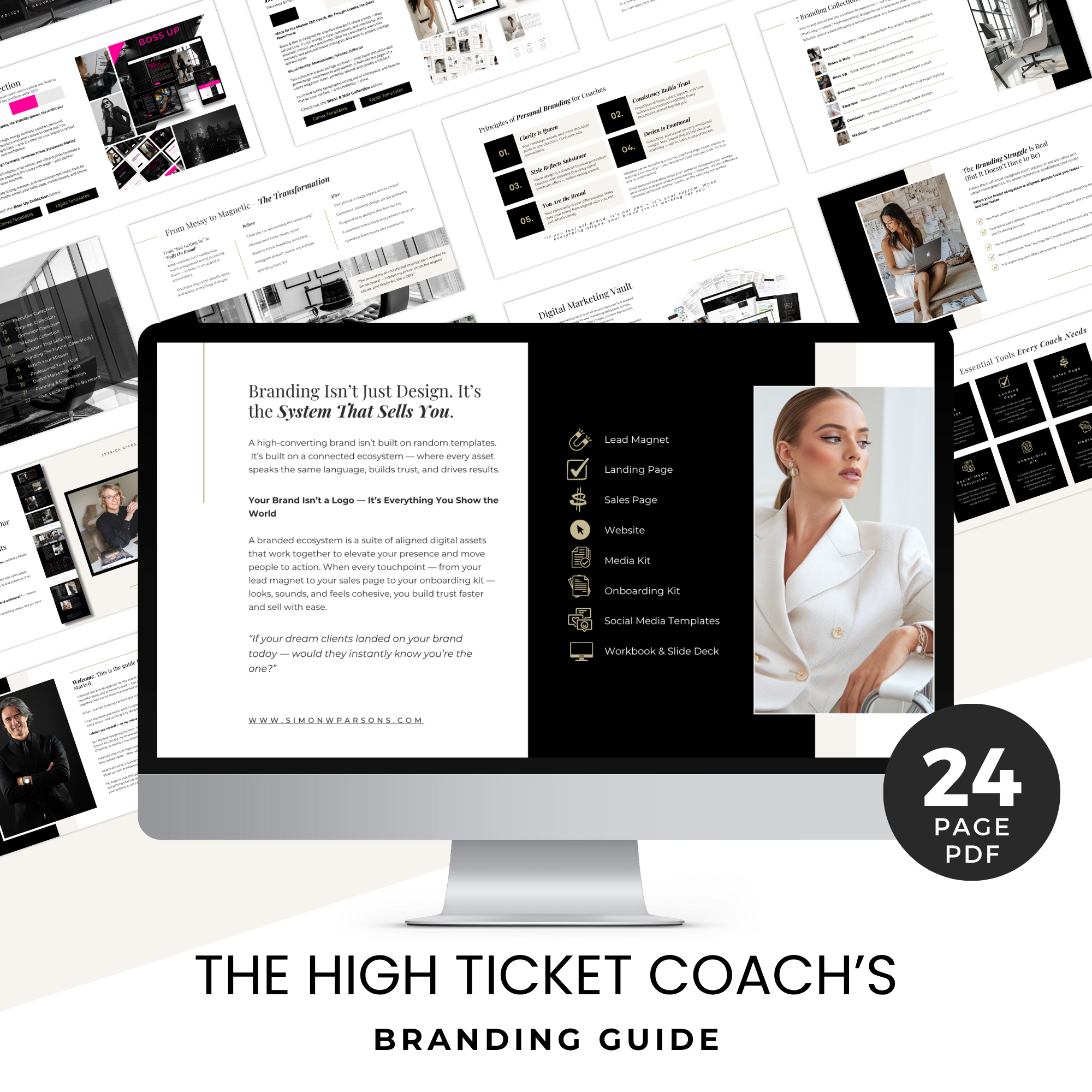
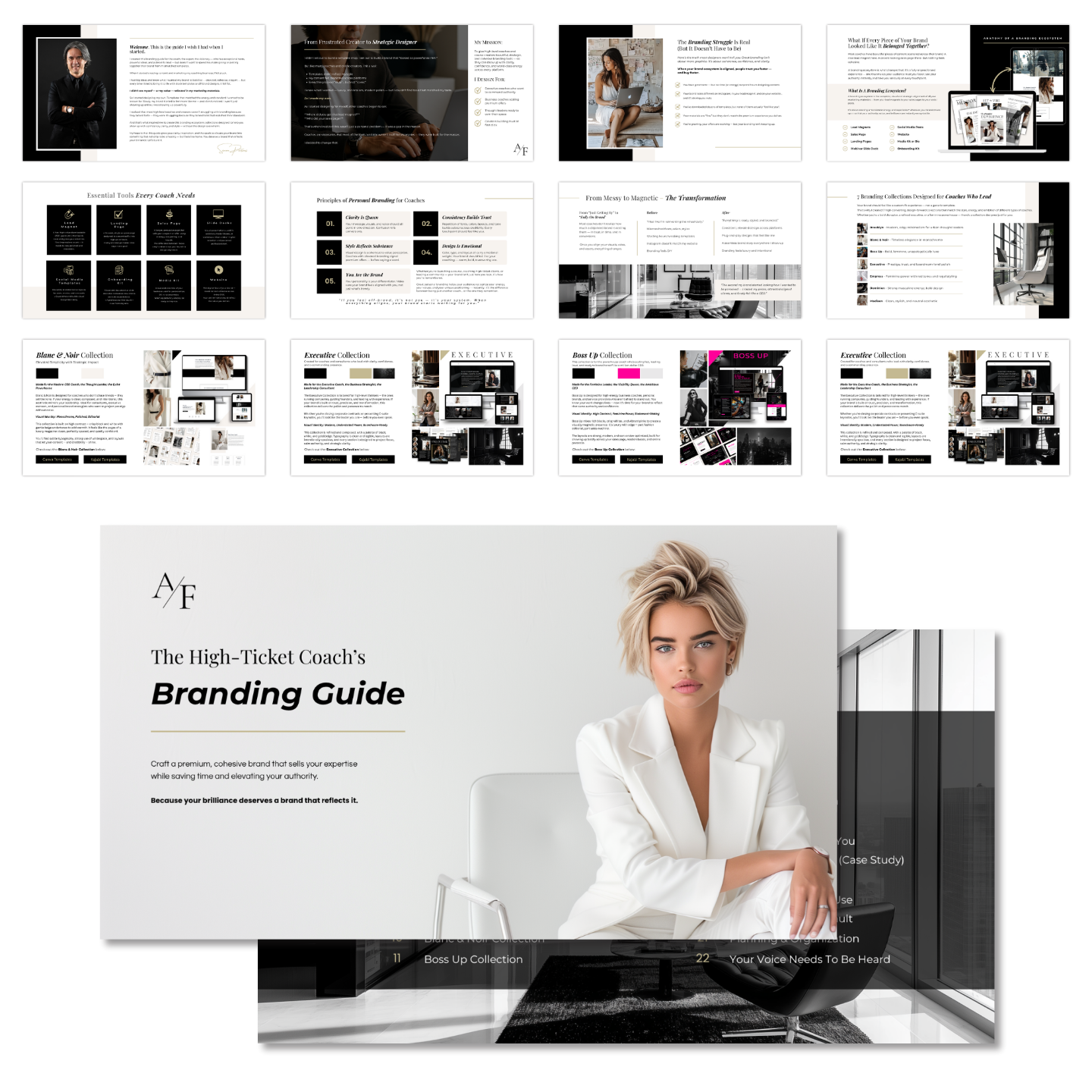
Grab my free High Ticket Coach Branding Guide
A free guide for coaches, consultants, and creators who are ready to ditch the DIY look and step into a cohesive, premium brand presence that sells.
We hate SPAM. We will never sell your information, for any reason.