
Personal Trainer Client Intake Form: What to Include and Why It Matters
Apr 12, 2026
You've signed a new client. Congratulations. Now comes the part most personal trainers either rush through or improvise entirely: the paperwork.
A client intake form is the first professional document your client sees from you. It shapes their perception of how you run your business before you've even met in person. Getting it right matters more than most trainers realize.
This article walks you through exactly what to include in your personal trainer client intake form, why each section earns its place, and how to avoid the mistakes that create gaps in your records and your liability coverage.
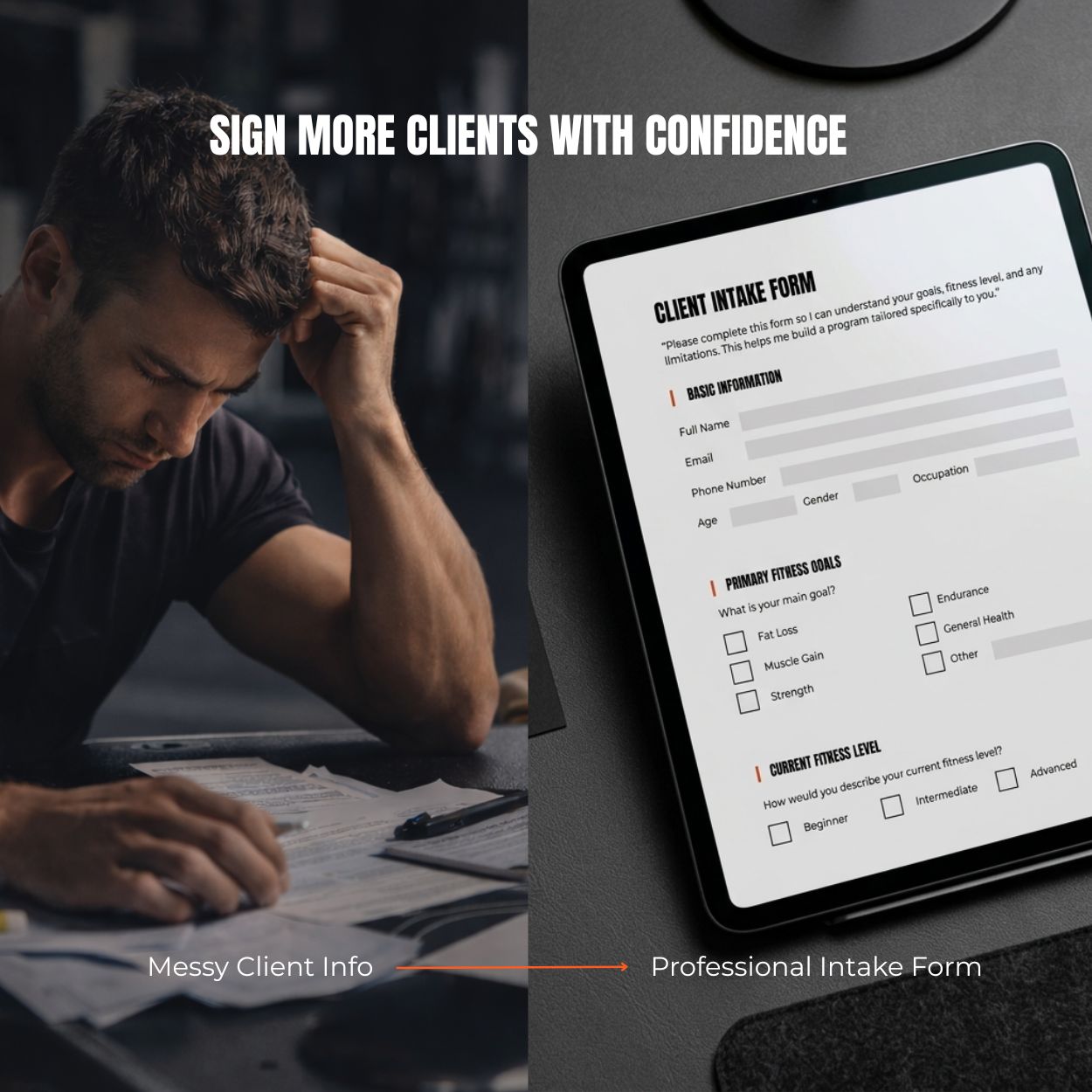
If you'd rather purchase a done for you version instead of creating your own from scratch, you can grab my personal trainer client intake form here.
What Is a Client Intake Form (and Why You Need One Before Session One)
A client intake form is a document you send to new clients before their first session. It collects the health, lifestyle, and goal information you need to train them safely and effectively.
It also does something less obvious: it signals professionalism. A well-designed intake form tells your client they've hired someone who has a process, takes their health seriously, and runs a real business.
Sending a generic Google Form at the last minute tells a different story.
If you're training high-ticket clients, your onboarding experience needs to reflect the investment they've made. The intake form is step one of that experience.
The 7 Things Every Personal Trainer Client Intake Form Should Include
Not all intake forms are created equal. Some trainers use a basic one-pager with a few health questions. Others hand over a five-page document that intimidates more than it informs.
The goal is comprehensive but focused. Every section should serve a clear purpose.
Here's what belongs in a professional personal trainer client intake form.
1. Personal Details and Emergency Contact Information
Start with the basics: full name, date of birth, phone number, email address, and an emergency contact with their relationship to the client.
This section feels obvious, but it's frequently incomplete. A missing emergency contact is a liability gap. Make it required, not optional.
2. Health History and Medical Clearance
This is the most critical section of any intake form. You need to know about:
- Current or recent injuries
- Chronic conditions (diabetes, hypertension, heart conditions, asthma)
- Previous surgeries or hospitalizations
- Medications that may affect training
- Any conditions a physician has flagged
For clients with significant health history, a note from their doctor may be required before you begin training. Your intake form should make clear that you reserve the right to request medical clearance.
Note: this section overlaps with a PAR-Q (Physical Activity Readiness Questionnaire), but they are not the same document. More on that distinction below.
3. Fitness Goals and Training Preferences
Open-ended questions here get you better information than checkboxes.
Ask what they want to achieve and by when. Ask what they've tried before and what didn't work. Ask whether they prefer a specific style of training or have activities they want to avoid.
This section tells you how to coach this person, not just how to train them. The difference matters.
4. Lifestyle Factors That Affect Results
Training is roughly 30% of the result. The rest comes down to what happens outside the gym.
Your intake form should ask about:
- Sleep quality and average hours per night
- Stress levels and work schedule
- Nutrition habits (you're not prescribing a meal plan, but you need context)
- Alcohol consumption
- Hydration
Clients who feel seen as whole people, not just bodies to be trained, stay longer and refer more. These questions are where that relationship starts.
5. Program and Schedule Preferences
When are they available? How many sessions per week are they committing to? Do they prefer morning or evening? Are they training with you in person, online, or a mix?
Capture this upfront so there's no ambiguity about what was agreed.
6. Previous Experience and Current Fitness Level
How long have they been training? What does their current routine look like, if anything? Can they hold a plank for 30 seconds or do they need to start from zero?
This isn't about judgment. It's about programming the right session from day one and avoiding the mistake of pitching your new client's fitness level in either direction.
7. Consent, Liability, and Signature
Your intake form should include a consent statement confirming the client understands the physical demands of training and assumes responsibility for their participation. This is not a substitute for a full liability waiver, but it's an important layer of protection.
Include a date and signature field. If you're collecting this digitally, make sure the platform captures a timestamp.
The Difference Between an Intake Form and a PAR-Q
Personal trainers frequently confuse these two documents, or assume one replaces the other.
A PAR-Q (Physical Activity Readiness Questionnaire) is a standardized health screening tool specifically designed to identify whether a client needs medical clearance before starting an exercise program. It asks a defined set of seven questions related to cardiovascular and musculoskeletal risk.
A client intake form is broader. It collects goal information, lifestyle data, scheduling preferences, and personal details that a PAR-Q never touches.
You need both. They work together, not instead of each other.
Common Mistakes Personal Trainers Make With Client Intake Forms
After working with trainers at all stages of building their businesses, these are the patterns I see most often.
Sending it too late. If your client fills out their intake form five minutes before their first session, you've lost the opportunity to actually use the information. Send it the moment they sign up, and review it before you meet.
Making it too long. A 12-page intake form signals bureaucracy, not professionalism. Include what you need. Cut everything else.
Skipping the lifestyle questions. Trainers who only ask about injuries and goals miss half the picture. Sleep, stress, and nutrition context change how you program and how you coach.
Using a generic template that doesn't match their brand. Your intake form is a client touchpoint. If it's a plain PDF from a Google search, it undermines the premium positioning you've built everywhere else.
Not revisiting it. Client circumstances change. Build a habit of reviewing intake information every few months, especially for long-term clients.
Get a Done-For-You Client Intake Form Template
If you're building your client onboarding process from scratch, designing a professional intake form yourself takes longer than it should. You have to get the structure right, write the questions clearly, format it for both digital and print use, and make sure it looks like it belongs to your brand.
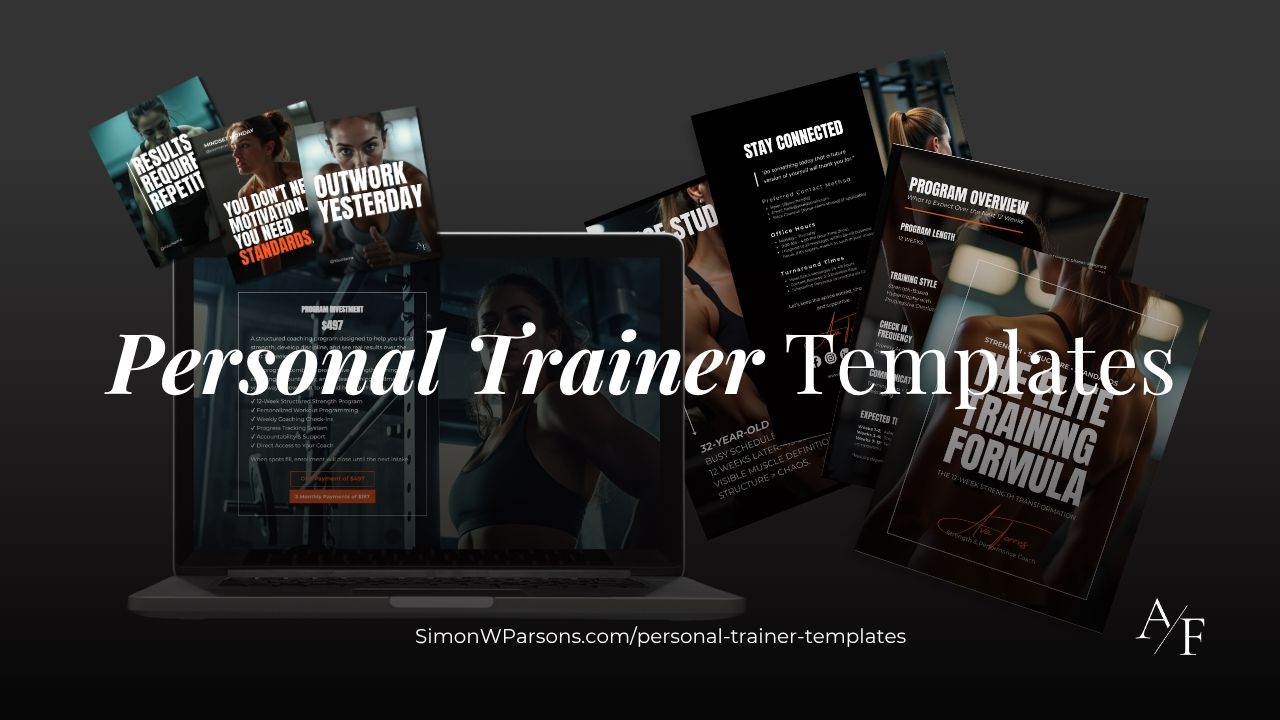
I built several Personal Trainer Client Forms to handle exactly this. Fully designed client intake forms alongside a PAR-Q, liability waiver, and coaching agreement, all formatted as professional, editable Canva templates.
You customize them with your business name, colors, and logo. Then you send them to every new client looking like the experienced, organized trainer you are.
Take a look at the Personal Trainer Templates collection to see everything that's included, I've even got a Kajabi Sales Page template for personal trainers as well as more Kajabi templates in the works.
Simon
Grab my free High Ticket Coach Branding Guide
A free guide for coaches, consultants, and creators who are ready to ditch the DIY look and step into a cohesive, premium brand presence that sells.
We hate SPAM. We will never sell your information, for any reason.